
The Architectural Shift: From Cloud-Dependent APIs to Local Edge Voice Intelligence
For over a decade, voice assistants and voice-activated software architectures relied almost exclusively on cloud-centric API infrastructures. Massive centralized server clusters powered commercial systems like Amazon Alexa, Google Assistant, and Apple Siri. While these cloud platforms delivered impressionable natural language understanding at the time, they introduced fundamental architectural liabilities: high end-to-end latency (often exceeding 2 to 3 seconds), strict internet bandwidth dependencies, continuous subscription or per-token operational costs, and persistent data privacy concerns. Transmitting unencrypted, raw acoustic payload data over public networks created significant security vulnerabilities and privacy friction for both consumer and enterprise applications.
Today, a technical paradigm shift has altered the voice AI landscape. The convergence of energy-efficient Neural Processing Units (NPUs), highly optimized C++ inference engines, high-performing Small Language Models (SLMs), and ultra-lightweight Text-to-Speech (TTS) runtimes has unlocked fully local, hardware-accelerated speech pipelines. Developers can now execute a complete voice pipeline—comprising wake-word detection, Speech-to-Text (STT), natural language intent reasoning, and speech synthesis—entirely offline on consumer edge hardware. Crucially, these local pipelines achieve sub-second (under 1000ms) end-to-end response latencies while guaranteeing 100% local data sovereignty.
Hardware Acceleration at the Edge: The Compute Engine Revolution
The viability of local voice AI relies heavily on low-cost, dedicated AI hardware capable of matrix-math acceleration without excessive thermal dissipation or power draw. Modern edge hardware configurations provide the compute headroom required to run multi-stage neural network pipelines concurrently.
Consumer NPUs and Low-Cost Single-Board Computers (SBCs)
Low-cost single-board computers have evolved beyond basic microcontrollers into real-time AI edge nodes. The introduction of affordable Neural Processing Units (NPUs) has transformed devices under $150 into high-throughput inference engines:
- Raspberry Pi 5 with Hailo-8L: Paired with the Hailo-8L NPU AI Kit via a PCIe bus, the Raspberry Pi 5 can deliver up to 13 Trillion Operations Per Second (TOPS). This dedicated compute headroom offloads convolutional and transformer layers from the main ARM CPU, leaving system memory free for concurrent tasks.
- Orange Pi 5 (Rockchip RK3588): The RK3588 System-on-Chip (SoC) integrates an onboard triple-core NPU delivering up to 6 TOPS. Combined with high-bandwidth LPDDR4x/LPDDR5 memory, it handles real-time quantized speech processing, wake-word validation, and compact language models on a single board with minimal power draw.
Unified Memory Architectures (UMA) and Apple Silicon
On desktop and home-server hardware, Apple’s M-series architecture (M1 through M4) has emerged as a gold standard for local AI hosting. The Unified Memory Architecture (UMA) grants the Central Processing Unit (CPU), Graphics Processing Unit (GPU), and Apple Neural Engine (ANE) direct access to a shared pool of high-speed memory. This eliminates the bandwidth bottlenecks typical of traditional PCIe transfers between system RAM and discrete VRAM. Accelerated frameworks such as Whisper.cpp and Apple’s MLX framework exploit this high-bandwidth memory to run 8-billion-parameter language models and heavy speech recognition transformers with minimal latency.
AI PCs and Consumer Desktop GPUs
In high-throughput enterprise or desktop environments, hardware acceleration leverages modern x86 AI PC architectures—incorporating Intel Core Ultra NPUs and AMD Ryzen AI engines—alongside discrete NVIDIA GPUs utilizing CUDA and TensorRT acceleration. Dedicated desktop GPUs allow multi-modal pipelines to run parallel tasks continuously: executing real-time voice activity detection (VAD), large-scale speech-to-text decoding, zero-shot voice cloning, and parameter-heavy SLM intent processing simultaneously in under 300 milliseconds.
The Modern 3-Stage Local Speech Stack
A resilient, low-latency offline voice pipeline relies on a modular, three-stage architectural stack. Each stage converts state transitions—from physical audio waves to structured text, from text to intent processing, and back to dynamic continuous audio synthesis.
Stage 1: Wake Word Detection and Speech-to-Text (STT)
The initial stage must continuously monitor acoustic environments without draining system resources or triggering false positives. Once valid speech is detected, raw audio streams are transcribed into text rapidly.
- Wake Word Systems: Runtimes like
openWakeWordandMicroWakeWorduse lightweight Deep Neural Network (DNN) binary classifiers. MicroWakeWord can run continuously on ultra-low-power microcontrollers (such as the ESP32-S3), consuming milliwatts of power while listening for keyphrases before alerting host servers. - Real-Time STT Engines: Once triggered, speech is piped into optimized speech-to-text engines.
Whisper.cpp(a high-performance C/C++ port of OpenAI’s Whisper) and CTranslate2-based engines likefaster-whisperuse INT8 and FP16 quantization to convert audio chunks into text streams in real time. Rather than waiting for the speaker to finish, modern local STT implementations use stream chunking to process speech progressively.
Stage 2: Intelligence and Intent Reasoning via Quantized SLMs
Historically, intent processing relied on rigid slot-filling rule engines or regular expressions. Modern pipelines replace strict pattern matching with quantized Small Language Models (SLMs) capable of flexible context understanding, slot extraction, and structured output generation.
Models such as Llama 3 (8B), Phi-3 (3.8B), and Gemma 2 (2B and 9B) offer rich language comprehension when executed through optimized C++ runtimes like llama.cpp or engine orchestrators like Ollama. Using state-of-the-art 2-bit, 4-bit, and 5-bit GGUF or EXL2 quantization techniques, an 8-billion parameter model can fit inside 4GB to 6GB of system RAM or VRAM while maintaining reliable intent reasoning capabilities.
Stage 3: Low-Latency Text-to-Speech (TTS) Synthesis
The final stage converts text responses generated by the language model back into dynamic, natural-sounding audio waveforms. Zero-latency user experience requires speech synthesis engines to stream initial audio packets back to the listener before the full text string finish rendering.
- Piper TTS: An ultra-fast, C++ based local text-to-speech system optimized for edge devices like the Raspberry Pi 4/5. Piper utilizes ONNX runtime optimizations to generate human-like audio with a Real-Time Factor (RTF) well below 0.1 on modest CPUs, ensuring audio playback begins within milliseconds.
- StyleTTS2 & ChatTTS: For environments with access to discrete GPUs or high-performance NPUs, advanced neural architectures like StyleTTS2 enable zero-shot voice cloning, expressive emotional intonation, and hyper-realistic conversational cadence offline.
Architectural Pattern: Satellite + Central AI Server Topology
Deploying powerful compute hardware in every room of a facility or home is cost-prohibitive and inefficient. Consequently, system architects have standardized on a decentralized Hub-and-Spoke (Satellite + Central AI Server) deployment topology.
In this architecture, inexpensive, low-power edge endpoints (“Satellites”) act as distributed acoustic sensors throughout a physical space. These satellite nodes handle light computing tasks—such as continuous wake-word detection, active noise suppression, echo cancellation, and voice activity detection (VAD). Upon detecting a valid wake word, the satellite opens a low-latency network connection (via WebSockets, MQTT, or RTSP streaming) to transmit raw PCM audio data directly to a centralized processing server (“Hub”).
The centralized Hub—typically hosted on a local Mac Mini, an NPU-equipped mini PC, or a home media server—receives the high-bitrate audio stream, runs the 3-stage local speech stack, and streams the synthesized speech response back to the satellite for immediate playback.
This topology offers several distinct structural advantages:
- Hardware Efficiency: Expensive compute resources are centralized, serving dozens of rooms or zones from a single machine.
- Physical Footprint and Acoustics: Satellites remain small, fanless, and silent, drawing under 2 Watts of power.
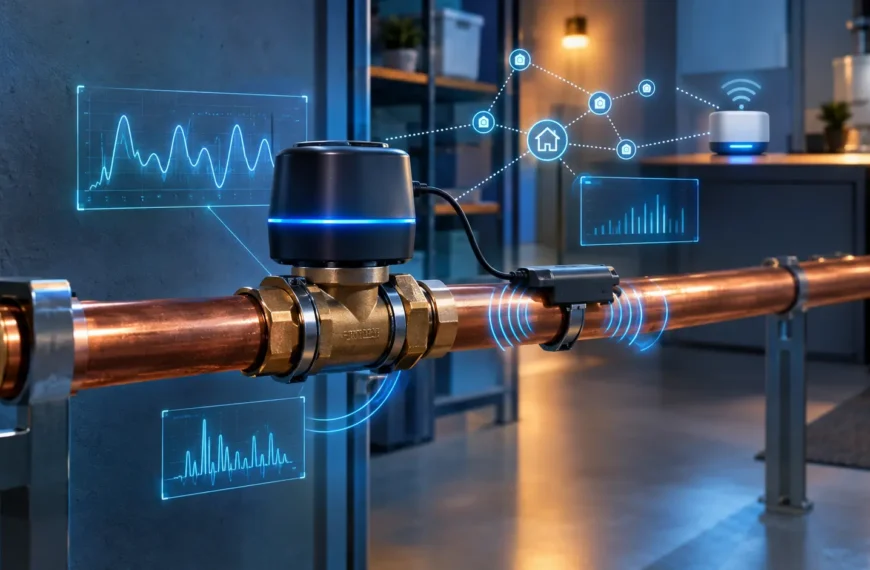
- Ecosystem Extensibility: Central hubs can bridge speech pipelines directly into local orchestration fabrics, such as IoT automation systems, localized robotics networks, or smart water infrastructure and automated telemetry systems.
Reference open-source implementations such as Willow (developed by Toitware) and Rhasspy prove that this decentralized architecture can achieve end-to-end response times under 500ms over local Wi-Fi or Ethernet setups, outpacing traditional cloud assistants.
Developer Tooling, Standardized APIs, and Ecosystem Integration
The practical adoption of local voice AI relies heavily on standardized software abstractions that simplify integration for software engineers.
OpenAI-Compatible Local Endpoints
Runtime environments like Ollama, LocalAI, and vLLM expose native HTTP REST and WebSocket APIs that mirror OpenAI’s cloud endpoint structures (such as /v1/chat/completions and /v1/audio/transcriptions). This architectural compatibility allows developers to transition existing software products from cloud backends to fully local hardware pipelines simply by updating their base URL parameters to local hosts, eliminating the need to rewrite core application logic.
Turn-Key Home Automation Frameworks
The open-source home automation platform Home Assistant accelerated the adoption of local voice pipelines with its “Year of the Voice” initiative. By integrating MicroWakeWord, faster-whisper, Local Assist engines, and Piper TTS into unified pipeline configurations, non-specialist developers can set up production-ready, fully local voice control architectures in minutes.
The Function-Calling Challenge: Deterministic JSON Outputs
Despite these advancements, a primary engineering challenge in local voice AI involves structured function calling. When a user requests an action—such as setting a room temperature or querying an internal system state—the language model must generate valid, deterministic JSON data payloads rather than conversational prose.
While multi-hundred-billion parameter cloud models handle tool selection naturally, smaller quantized models (2B to 8B parameters) can occasionally produce invalid syntax or hallucinations. To resolve this bottleneck, developer ecosystems leverage constrained decoding tools such as Outlines, JSON Schema Grammar Enforcement, and specialized libraries like Instructor. These frameworks force the sampling engine of local models (e.g., llama.cpp) to only select tokens that comply with pre-defined JSON schemas, guaranteeing 100% syntactically valid tool invocation at the edge.
Comparing Edge AI and Cloud AI Voice Architectures
Evaluating edge-native speech pipelines against traditional cloud architectures highlights clear trade-offs across performance, privacy, cost, and infrastructure dependencies:
| Architecture Metric | Traditional Cloud Voice Pipeline | Local Hardware-Accelerated Pipeline |
|---|---|---|
| End-to-End Latency | 1,500ms – 3,500ms (Dependent on WAN) | 300ms – 900ms (Local Sub-Second) |
| Data Privacy & Security | High Risk (Audio transmitted to 3rd party) | Zero Leakage (100% Offline / On-Premise) |
| Internet Dependency | Critical (Fails completely if offline) | None (Operates fully air-gapped) |
| Operating Costs | Recurring (Per-token/minute API billing) | Zero API Fees (Fixed local hardware cost) |
| Hardware Overhead | Minimal at Edge (Basic speaker required) | Requires Local Compute Node (NPU, GPU, or UMA) |
| Complex Reasoning | Extremely High (Access to massive LLMs) | High (Sufficient for domain tasks via SLMs) |
Privacy, Security, and Operational Resilience
Deploying local voice pipelines offers major operational advantages for privacy-conscious organizations and industrial deployments:
- Zero Data Leakage: Sensitive corporate audio, private conversations, and internal system logs never leave the local network boundary, maintaining compliance with strict regulatory regimes like GDPR and HIPAA.
- Air-Gapped Operational Resilience: Systems continue functioning reliably during internet outages, upstream ISP failures, or cloud service disruptions. This level of availability is critical for mission-critical facility controls and safety installations.
- Elimination of API Cost Scaling: High-volume commercial implementations incur zero incremental costs per user query, insulating organizations from unpredictable SaaS pricing shifts or rate-limiting restrictions.
- Immunity to Service Deprecation: Local open-source models remain functional indefinitely, preventing commercial vendor deprecations from breaking client products.
Future Outlook: The Next Horizon in Edge Voice Intelligence
The trajectory of local voice AI points toward natively multi-modal, end-to-end continuous speech architectures. Instead of running separate discrete modules for speech recognition, text-based LLM processing, and text-to-speech generation, emerging research models integrate raw audio-in to audio-out processing natively (Speech-to-Speech models). By operating directly on continuous acoustic tokens rather than converting intermediate state data into text representations, these unified architectures preserve emotional nuances, vocal inflections, interruptibility, and sub-200 millisecond response speeds.
Concurrently, silicon manufacturers are embedding ultra-low-power neural accelerator blocks into standard microcontroller designs. As silicon efficiency improves, multi-billion-parameter language understanding engines will eventually run inside compact, battery-powered IoT devices, making fully private context-aware voice interfaces ubiquitous across industrial, automotive, and domestic environments.
Frequently Asked Questions (FAQ)
1. Can a local voice AI pipeline run effectively on a standard Raspberry Pi 5 without an NPU?
While a standalone Raspberry Pi 5 can execute basic wake-word engines and lightweight text-to-speech tools, running a modern Speech-to-Text model (like Whisper.cpp) alongside an 8-billion-parameter Small Language Model on the main CPU results in noticeable latency (often 5 to 10 seconds per response). Adding a low-cost PCIe NPU accelerator—such as the Hailo-8L—or delegating language inference to a centralized home server is essential for maintaining sub-second performance.
2. How do local small language models (SLMs) handle complex intent understanding compared to cloud models like GPT-4o?
While 2B to 8B parameter local models lack the broad world knowledge and general synthesis capacity of massive cloud models, they perform exceptionally well when fine-tuned or prompted for specific tasks. When constrained via strict grammar enforcement tools (such as Outlines or JSON schemas), local SLMs provide accurate tool invocation, device orchestration, and intent classification for targeted operational domains.
3. Is internet access required after setting up a local voice server?
No. Once the underlying model weights, system dependencies, and runtime engines are downloaded and configured on the target hardware, the complete speech pipeline operates in an entirely air-gapped environment without needing an active internet connection.
4. How do local voice pipelines handle multiple microphone zones across large environments?
Local voice implementations typically use a Satellite-Central Hub topology. Inexpensive microcontrollers (such as ESP32-S3 boards) equipped with dual microphone arrays act as localized zone listeners. These satellites handle local wake-word activation and transmit raw audio streams over the local network to a central server node, which runs the main AI stack and routes responses back to the originating speaker zone.
Hardware-Accelerated Voice AI at the Edge
The transition from cloud-hosted API models to local, hardware-accelerated speech stacks represents a major advancement in voice system architecture. By pairing specialized NPU edge compute hardware with C++ optimized inference runtimes and efficient Small Language Models, developers can deploy private, resilient, and ultra-low-latency voice interfaces today. As open-source models improve and hardware accelerators become increasingly ubiquitous, edge-native voice processing will establish itself as the standard for responsive, privacy-first software interaction.